Be yourself; Everyone else is already taken.
— Oscar Wilde.
This is the first post on my new blog. I’m just getting this new blog going, so stay tuned for more. Subscribe below to get notified when I post new updates.
Be yourself; Everyone else is already taken.
— Oscar Wilde.
This is the first post on my new blog. I’m just getting this new blog going, so stay tuned for more. Subscribe below to get notified when I post new updates.
Cost is often the first thing that comes to mind when motorists think of gasoline. Many will drive halfway across town to save a couple cents per gallon. Additionally, purchasing regular-grade fuel to save money can be an exercise in false economy, especially if your vehicle is designed for premium gas.
Advertisement
Powered By
Running fuel with insufficient octane can cause internal engine damage, which isn’t pretty. “The worst case scenario …. You could actually [melt] holes in the pistons and cause catastrophic damage to the [connecting] rods,” said Bill Studzinski, GM powertrain fuels group manager. Fortunately a disaster of this caliber is unlikely in today’s highly tuned, computer-controlled powerplants. Still he said, “You should follow the owner’s manual guidance.”
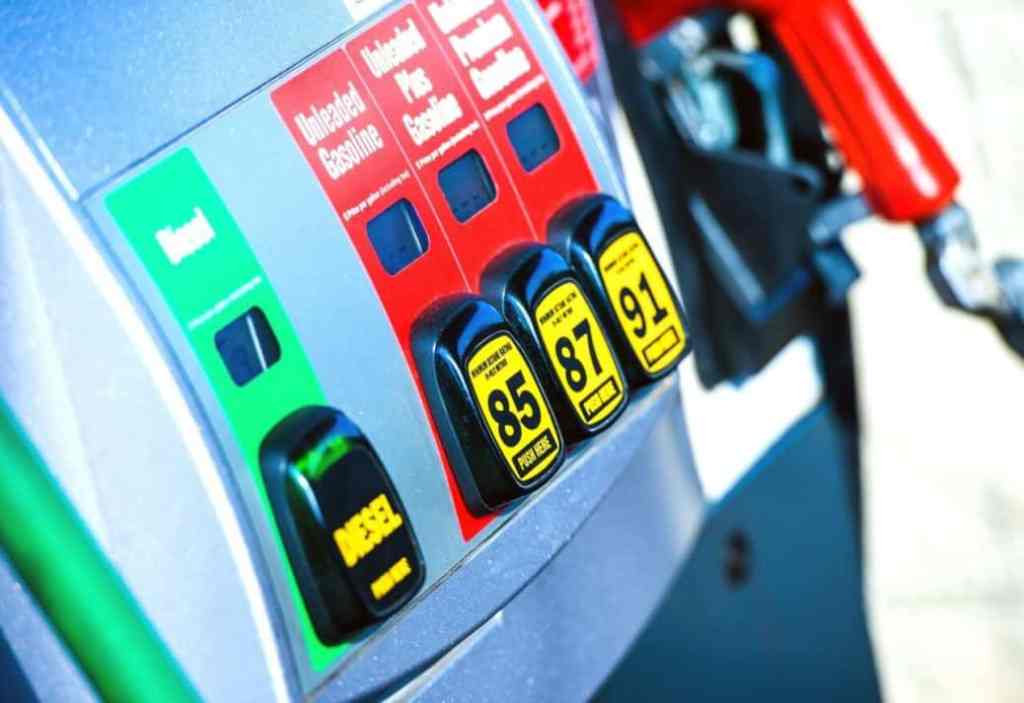
Octane
What’s more apt to happen when there isn’t enough octane is a phenomenon called spark knock. John Juriga, director of powertrain at the Hyundai America Technical Center described this abnormal combustion as “sort of a high-pitched pinging,” or perhaps even a rattling noise. This sound is caused by colliding flame fronts inside the combustion chamber, which lead to pressure spikes and ultimately that telltale sound. “Obviously knocking is not something customers like to hear,” he said, nor is it good for your engine.
Octane Requirements
Octane is a measure of gasoline’s resistance to igniting under pressure. To improve fuel economy and output figures, manufacturers often increase the compression ratios of their engines, that is, how tightly they squeeze an incoming air-fuel mixture. A lower-octane fuel is more likely to spontaneously ignite than one with a higher rating. For these reasons and more, performance vehicles or ones equipped with forced induction often demand premium.
SEE ALSO: What is Octane?
Studzinski said GM has two different fuel requirements. In some of their cars and trucks high-octane gasoline is recommended, in others it’s mandatory. Of course many of their vehicles are designed to happily burn regular gas.
2015 GenesisIt’s same story at Hyundai. Juriga said all of their products are rated to run on 87-octane fuel, though the Genesis models and Equus luxury sedan will benefit from premium, delivering more power and torque.
These cars are able to adapt to various octane levels. Juriga noted that they’ve allowed “the engine to sort of regulate itself.” Knock sensors detect any pinging and tell the powertrain-control computer to dial back spark timing to eliminate it.
Juriga said more advanced ignition timing – having the spark plug fire earlier – improves both low-end torque and high-RPM power, which is why automakers try to push it forward, though there is a practical limit.
Curiously, high-octane gasoline isn’t always the same from one market to another. “The petroleum industry has decided to sell premium as two different grades,” said Studzinski. East of the Mississippi River it’s rated 93 octane, west merely 91. Fortunately either should work.
“For General Motors in 2015, and previously, we always defined premium as 91 AKI or higher,” noted Studzinski. That three-letter initialism stands for anti-knock index, which is “the posted octane on the pump.”
Cheapening Out
What if you drive a vehicle that recommends premium fuel and you decide to save a few bucks and fill the tank with regular-grade gas? Studzinski said, “You won’t damage your engine but the following are the side effects: acceleration will be poor … and [a] loss of fuel economy.” This could be an instance of being penny wise and pound foolish.
Conversely if your car is only designed for 87 octane buying the expensive stuff may do little more than increase your costs. “Putting premium fuel in our vehicles most of the time won’t make a difference,” said Juriga, adding that these cars typically have spark-advance curves that are tuned for regular gasoline and can’t advance enough to take full advantage of the extra octane.
When to Step Up
In spite of this Juriga also said, “There could be a time when it’s beneficial [to step up a fuel grade].” For instance, if you’re driving through Death Valley and its 120 degrees out your vehicle’s powerplant is going to be ingesting very hot, dry air, a combination that can exacerbate the propensity for spark knock. “In that particular case the premium fuel would benefit,” he said, because the engine is going to be retarding timing to prevent knock and as a result performance will suffer. Higher octane can serve as a stopgap to prevent this.
Towing
Additionally Juriga said pinging is likely to occur at both low and high engine speeds while under heavy load. Typically “midrange [operation] is not a problem.” Keep this in mind if you tow or haul; extra octane might help with performance, especially if it’s sweltering outside.
“If you were to hear knocking or feel really sluggish acceleration you should try moving up an octane grade,” concurred Studzinski. “Under certain conditions you may need to.”
Mistakes Happen
Human error is unavoidable. If your vehicle requires premium fuel and you mistakenly put regular in the tank it’s probably not the end of the world.
Juriga said most automakers should have robust enough tuning that nothing catastrophic would occur. “I’m going to have no concern that I’m going to trash my engine,” he said, as long as it was operating in normal conditions. When it comes to something super exotic like a Ferrari he’s not certain if this would still be the case.
SEE ALSO: Which Stations Sell the Highest-Quality Gasoline?
Studzinski said as an engine compensates for lower octane it pulls spark timing and runs a richer air-fuel mixture. “You could throw more heat into the exhaust and [might] damage your exhaust components,” he said, chiefly the catalytic converter but, “Each OEM does it differently.” Do I Really Need Premium Gas?
Topping-Off the Tank
Filler DoorIf you want your car’s engine to run like the finely tuned machine it is do what the manufacturer recommends. “Everybody is pushing their powertrains as hard as possible … the owner’s manuals are important to follow regarding octane,” said Studzinski. Do this and you should be rewarded with years of trouble-free service.
Still, if your vehicle is tuned for regular-grade gasoline, “It does not benefit you, in most cases, to put premium fuel in,” said Juriga. Keep that in mind the next time you fill up.
Does Infiniti Need Premium Gas?
As a luxury brand, it stands to reason Infiniti vehicles would need premium fuel. And for the most part this is true. Their muscular, high-compression engines run best with as much octane as you can give them. This brand’s Q50 sedan and Q60 coupe require premium-grade gasoline. Ditto for the Q70, Q70L and the small QX30 crossover, however, larger Infiniti crossovers don’t necessarily require high-octane. In the QX50, QX60 and QX80 models it is only recommended. As usual, your mileage will vary.
Does Audi Require Premium Gas?
Audi S6
As with Infiniti, Audi vehicles almost unanimously require premium fuel, from the A4, A6 and A8 sedans to the Q5, Q7 and Q8 crossovers. Higher-octane fuel is recommended in many of its models as well, including the S7 four-door coupe, TT sports car and R8 exotic. High-performance powerplants run best with suitably high-octane fuel. About the only Audi model that runs happily on regular gasoline is the A3, this German automaker’s smallest and most affordable model.


Considering most people in the modern, industrialized world spend hours a day in an automobile, it is definitely a “place” that deserves a decent investment in every arena. From comfort to entertainment, your ride should be as pleasant as possible.
However, since the driver is expected to watch the road at all times, this leaves few options for entertainment beyond what the driver can here. That is why every automobile should have a quality speaker system.
Unfortunately, it can be difficult to know which speaker system is the right one for you. With a laundry list of numbers to decipher, we have taken it upon ourselves to provide a list of the 10 best 6X9 car speaker systems for good bass and sound quality. Moreover, we have also put together a comprehensive buyer’s guide, so you can make an informed decision.
best 6.5-Inch Component Speaker
Table of Contents
What is the Best 6X9 Speakers on the Market?
6×9 Speakers RMS Watts Speaker Type Sensitivity (dB) Impedance (Ohms) Frequency Response
Kicker 43DSC69304 D-Series Speakers Kicker 43DSC69304 70 3-way 92 4 30 – 20k Hz
Check Price
Infinity REF9620CX Component Speakers Infinity REF9630CX 125 Component 93 3 46 – 21k Hz
Check Price
Hertz CPX 690 PRO Hertz CPX 690 PRO 120 3-way 94 4 35 – 24k Hz
Check Price
Rockford Fosgate R169X2 speakers Rockford R169X2 65 2-way 90 4 48 – 20k Hz
Check Price
Alpine SPE-6090 6×9 speakers Alpine SPE-6090 75 2-way 91 4 65 – 18k Hz
Check Price
Polk Audio DB692 Motorcycle speakers Polk Audio DB692 150 3-way 93 4 30 – 22k Hz
Check Price
JBL CLUB 9630 speakers JBL CLUB 9630 80 3-way 93 3 50 – 20k Hz
Check Price
Pioneer TS-A6996R 5-way speakers Pioneer TS-A6996R 100 5-way 93 4 28 – 38k Hz
Check Price
Kenwood KFC-6965S 3-Way 6in. x 9in. Speaker Kenwood KFC-6966S 45 3-way 92 4 30 – 22k Hz
Check Price
Focal 690CA1SG car audio speakers Focal 690AC 75 2-way 91 4 50 – 20k Hz
Check Price
1. Kicker 43DSC69304 D-Series – Speakers for Deep Bass without an Amp
Kicker 43DSC69304 D-Series review
The first product on our list comes from Kicker who is not necessarily the most well-known manufacturer of car speaker systems but does have a distinctive niche. Specifically, kickers are known to produce good quality bass for their category.
Keep in mind, few, if any, 6X9 speaker systems are going to produce the kind of bass that bass heads crave. However, if you understand this ahead of time, you will still be pleasantly surprised by the bass that the Kicker provides.
Moreover, the Kicker is able to provide this high-quality level of bass without an amplifier for that 6X9 speakers. Of course, if you choose, you can hook this speaker system up to even a moderately powerful amplifier and get another solid boost to your bass.
👍🏻 Pros
Very crisp and clean sound
Deep bass but don’t expect them to rattle the windows
Volume with less distortion
👎🏻 Cons
Mount holes do not align
Need an amp to get all you can get out of them
Read Verified Customer Reviews
Go to the Top
2. Infinity REF9630CX – Best Component Speakers
Infinity REF9630CX Review
When it comes to quality, Infinity is quickly taking the automotive sound market by storm. While it may not have the same storied past as a Kenwood, Alpine, or Pioneer, Infinity more than makes up for it by producing one of the best 6X9 component speakers on the market today. Of course, all of that quality has to hit you somewhere.
For the infinity, that hit is going to come at your wallet, as the Infinity does come with one of the heftier price tags on our list. Still, with 125 RMS watts per speaker, it is kind of hard to argue with that price. Unfortunately, that level of power will more or less necessitate the addition of an external amplifier to truly get the best sound quality out of these speakers.
One thing that is a bit odd is that these speakers are amazing along the soundstage spectrum until you hit the extremes. A frequency range of 46Hz-21kHz is actually pretty pedestrian at this price tag. Though most music will not see a difference, so this is still an excellent speaker system for most people’s needs.
👍🏻 Pros
Clarity is great
If you put in the time for precise positioning, this speaker system will provide one of the best soundscapes
Nicely built
👎🏻 Cons
A fairly expensive 6X9 speaker system
Will definitely require an amplifier to get the most out of them
Crossover is a little big and challenging to locate in the door panel
Read Verified Customer Reviews
Go to the Top
3. Hertz CPX 690 PRO – Most Powerful and Sound Quality Speakers
Hertz CPX 690 PRO ReviewAs the most expensive product on our list, you expect Herta to perform better than any other competitor. In this regard, your expectations will be met and likely exceeded. At 120 RMS watts, this speaker system is the most powerful and best sound quality 6X9 speakers on our list.
Granted, all of that power will only see the light of day if you provide an adequate amplifier. However, if you do, the speakers will allow you to blast the volume on this speaker system without having to worry about distortion or a muddied soundscape.
Unfortunately, part of the reason the soundscape will stay so clear is that the bass is nothing to brag about. However, it is not a weakness either and generally performs much better than the other speaker systems on our list do. Combined with a tweeter and super tweeter, and you have everything you should reasonable desire from a 6X9 speaker system.
👍🏻 Pros
120 watts RMS is the most on our list
Sound really clear and loud
Respectable bass for a 6X9 speaker system
👎🏻 Cons
Easily the most expensive speaker system on our list
Will require a decent amplifier to get the most out of them
Read Verified Customer Reviews
Go to the Top
4. Rockford R169X2 – Best Speakers for the Money
Rockford Fosgate R169X2 Review
Our final product comes from Rockford Fosgate, a respected brand in automotive speaker systems if not quite as storied as Alpine or Kenwood. Still, at the lower end of the price point, the Rockford does manage to provide a decent 6X9 speaker system that is especially designed for sensitivity. Though, the Rockford has the lowest sensitivity range of only 90 dB.
Unfortunately, the speakers themselves are a bit underpowered with only 60 RMS watts. Surprisingly though, for its sensitivity levels and somewhat low RMS wattage, the Rockford is still able to generate an impressive bass–all things considered. Unfortunately, where it provides a better than expected bass, its overall frequency range is a bit lower than one would hope–though not so low that most people would even notice.
👍🏻 Pros
Incredibly reasonably priced
Much cleaner sound overall than the factory speakers
Good bass
👎🏻 Cons
The mounting holes didn’t exactly line up
Distortion at higher volumes
Read Verified Customer Reviews
Go to the Top
5. Alpine SPE-6090 – Budget Speaker System Soundscape
Alpine SPE-6090 Review
Alpine is one of the legacy brands on our list and has been producing high-quality automotive speaker systems for decades, so it should come as no surprise that it makes an appearance on our top 10 list. What might be more surprising is its claim to fame: this is the best budget speaker system.
Alpine accomplishes this with a few features. First, with a price this low, you may make a double take to be sure that this truly is an Alpine product. Moreover, a tweeter that utilizes a dome architecture and a silk material construction, you are sure to receive excellent quality highs.
Unfortunately, at this price point, you cannot expect the absolute best soundscape. The Alpine’s bass is definitely a bit disappointing–especially for the brand–while the frequency range is a bit truncated compared to some of its competitors at a narrow 65Hz-18000kHz.
Jeep Patriot Factory Speakers Vs. Alpine SPE-6090
👍🏻 Pros
The price is right for what you are getting
Improved sound quality over the factory speakers
The tweeter uses a soft dome silk design
👎🏻 Cons
The highs seem to be a bit bright and not well balances
Have poor base
Read Verified Customer Reviews
Go to the Top
6. Polk Audio DB692 – Motorcycle and Marine Speakers
Polk Audio DB692 Review
Polk has been a competitor in the higher-end automotive speaker system market for some time now, but they generally do not crack the top 3. In this regard, that trend continues as the Polk is a solid if unspectacular, 3-Way system. However, its extremely reasonable price and water- and dirt-resistant does make it our best 6X9 motorcycles speakers, boats, and cars also.
Like many component speaker systems, the Polk does put forth some solid power with a near-best 150 RMS watts. The high sensitivity of 93 dB let you use them with a factory radio.
That would not necessarily be so bad, but the bass does not truly warrant an amplifier as it is middling at best. However, you might want to spring for the amplifier anyway, as the soundscape at this price point is nearly incredible.
👍🏻 Pros
Better high & low frequency response
High power handling RMS
Built for all types of weather
Good sensitivity for a non-amp setup
👎🏻 Cons
Highs aren’t as bright
No rubber gasket for the back of the speaker
Read Verified Customer Reviews
Go to the Top
7. JBL CLUB 9630 – Speakers for Bass with an Amp under $100
JBL CLUB 9630 Review
If you already have an amplifier or are intending to purchase one, then the JBL will provide a decent bass response for a 6X9 car speakers under $100. However, if you do utilize an amplifier with this speaker system, you will be further surprised as the tweeter and super tweeter provides an excellent quality soundscape.
Still, with only a 3 ohm impedance and slightly above average RMS wattage of 80, you will be able to crank this speaker system up to 11 and still get great quality sound. Unfortunately, because they are made to be played at high volumes–and the consumers generally oblige–these speakers find themselves blowing out quicker and more often than some of their competitors.
👍🏻 Pros
Significant upgrade from factory
No amp is needed to make sound great
Good highs, clean and crisp
👎🏻 Cons
Bass response could be more
Terminals are flimsy
Read Verified Customer Reviews
Go to the Top
8. Pioneer TS-A6996R – Coaxial 5-Way Speakers
Pioneer TS-A6996R Review
Another legacy manufacturer of automotive speaker systems, Pioneer has been leading the way for decades when it comes to refining the soundscape of audio equipment. With this 6X9 speaker system, they look to continue that trend. As the only 5-way speaker system on our list, the Pioneer easily outperforms any other product in its price range when it comes to mids and highs and even gives the premium priced systems a run for their money.
However, to produce such high-quality highs, Pioneer had to ensure that the speakers would not become unduly taxed. As such, they restricted the RMS wattage to a measly 50 watts. Moreover, they do not require a higher power input to get the same sound with a sensitivity of 93 dB. Considering this, the Pioneer is definitely intended to be used for mid-volume listening only. Though, within this range, you will not be disappointed.
👍🏻 Pros
Clean and clear sound
Upper & lower range are superb
Decent 6x9s for the price but nothing great
👎🏻 Cons
Lacking in bass
Read Verified Customer Reviews
Go to the Top
9. Kenwood KFC-6966S – Speakers under $50
Kenwood KFC-6966S Review
Kenwood follows a similar suit as Alpine and focused on appealing to the largest demographic to cash in on its stellar reputation and brand name recognition. However, they were able to do so while still putting out a decent speaker system which is why they earned our best budget 6X9 coaxial speaker system designation.
Unfortunately, to keep the price down, these speakers are the least powerful on our list. With a paltry 45 RMS watts, you should not expect them to get nearly as loud as many of the other entries on this list. Moreover, that low power consumption also restricts the bass response of the Kenwood which is fairly non-existent according to the audiophile definition.
However, this is still the least expensive speaker system on our list. Moreover, in an effort to appeal to most consumers, the adequate sensitivity of 92 dB prevents the need of having to purchase an external amplifier.
Kenwood 6×9″ Speaker Unboxing Model KFC-6965S
👍🏻 Pros
The least expensive speakers on our list, though still a decent quality
Improved the sound quality from the stock speakers
Great economical speaker
👎🏻 Cons
At 45 watts RMS, this is the least powerful speaker on our list
Needs a little more bass
Read Verified Customer Reviews
Go to the Top
10. Focal 690AC – 2-Way Coaxial Speakers
Focal 690AC Review
If all you care about is the clarity of the soundscape and are willing to pay a relatively high price to get it, then the Focal is the 6X9 speaker system for you. Sporting a coaxial design, the aluminum dome tweeter, and woven glass-fiber woofer combines to reproduce almost any sound with crystal clarity.
Unfortunately, that is made much easier due to the Focal’s somewhat low RMS watts at only 75. Moreover, while the bass is clear, it is not all that powerful–likely another side effect of the low RMS wattage. However, if nothing else, this means that you will see almost everything this speaker system has to give without the need for an amplifier.
The Focal does at least offer adjustable tweeter for further customization with the soundscape.
👍🏻 Pros
The best clarity of soundscape in a coaxial speaker system
The Focal uses high-quality materials throughout its construction
Adjustable tweeters on a coaxial unit is pretty nice
Great bass for 6×9’s but you’ll still need a sub
👎🏻 Cons
One of the more expensive speaker systems on our list
Read Verified Customer Reviews
Go to the Top
Infographic
Best Car Speakers Buyers Guide Infographic
Buyer’s Guide
How does a component and a coaxial speaker differ?
These are the two primary types of 6X9 speaker. Each has their advantages and disadvantages, so you must weigh carefully what you want and what you are capable of accommodating ahead of time. At their most basic the difference between a coaxial, or full-range, and a component speakers system has more to do with where the different parts of the speaker are located.
component and a coaxial speaker differWith component stereo systems, the speakers which handle the lows, mids, and highs are all separate from one another. This can technically allow for the best listening experience because you are given the option to adjust the speakers–both externally and internally–individually, which allows far more variation and customization than with a coaxial setup.
However, component speakers cost more of everything. First, with 3 separate components, this speaker system will occupy far more physical space. Moreover, the arrangement of those components in that space will heavily influence the ultimate quality of the listening experience.
Also, component stereo systems have a tendency to consume more power. With 3 separate lines to feed–per speaker system–component speakers often require far more powerful and advanced amps.
Finally, component stereo systems are simply more expensive in general. Aside from the fact that you often need a more powerful–and expensive–amp and monitoring system, you will also often need to purchase the components separates–though you can often find bundle deals.
Coaxial speaker systems, by comparison, are far easier and cheaper to deal with. All of the different speakers–lows, mids, and highs–are stacked on top of one another. This is not only more cost effective and space saving, it generally requires lower power outputs which means you do not need as good of an amp to effectively run it.
However, while coaxial speakers generally produce a smoother soundscape, they do have a limit, and the different frequency ranges can muddy one another if the speakers are not of a high enough quality.
Do these speakers require an amplifier?
Depending on the power consumption of your speaker system you may need to purchase a separate amplifier. This is especially relevant for high-quality speaker systems which generally require far more power than a basic car’s power control system can manage. Even for luxury vehicles, a top of the line stereo system will often be better served by an external amplifier.
Even if the vehicle’s amplifier is well-rated, an external amplifier can often handle the energy transfer to the various speakers more efficiently and prevent the energy from becoming dirty with interference.
However, for mid-tier or lesser quality 6X9s, there is usually no need to spend the extra expense on a high-end external amplifier. Those class of speakers are unlikely to be able to make full use of the amp’s specs–though there will still be an improvement in the soundscape, and the durability of the system is definitively improved.
Can 6X9 speaker provide powerful bass?
6×9 speaker and bassSince the bass produced by in speaker is directly correlated to the size of the speaker’s membrane, the question of whether or not a 6X9 can produce powerful bass will hinge heavily on how you define the term “powerful.”
If you are looking for bass that will rattle the fluid inside of your ears and make your vision blur, then no, 6X9 speakers do not provide powerful bass–regardless the quality.
However, if you are simply looking for bass that is loud enough to either provide a good punch or a rich, deep, dulcet tone, then there are plenty of 6X9 speakers that are capable of handling this job. Of course, the higher end speakers will also often require an external amplifier to produce the best bass.
In fact, unless the speakers are extremely modest in the amount of powerful they consume and can use to push the sound, most 6x9s, regardless the quality, will produce better bass when hooked up to an external amplifier. Just be sure that you do not set up your speaker system to push too much power at once or else you risk blowing out your speakers sooner.
Speaker Specifications
Speaker Materials
This is arguably the most important quality to consider when selecting any speaker, not just 6x9s. The quality of the materials will directly determine the quality of the soundscape produced as well as the longevity of the speakers in question. However, each part of the speaker will require different materials to produce the best sound.
The woofer materials should be both lightweight and stiff. This generally takes one of 2 forms:
either woven fabrics coated with light metals;
synthetic films mixed with crystalline coatings.
The latter of the 2 generally produces more accurate bass, but the former will often be more durable.
Tweeters, the speakers that produce the highs in a 6X9, can utilize similar materials as the woofer, specifically the synthetic poly blends. However, these speakers generally perform best when the membrane is made out of silk. However, if you prefer brighter highs, you might want to look for tweeter membranes made out of metals, graphite, ceramics, or other high-quality, hard materials.
Component Materials
Tweeter Silk, polyurethane for mellow sound. Metal, ceramics and graphite for brighter highs.
Woofer Polypropylene best for bass. Woven fabrics or metal coated synthetics also be used.
Surround Materials The best material is rubber. Foam and cloth surrounds are less expensive.
Power Consumption (RMS)
Power Consumption of Car AcousticThis quality is generally measured in watts with the higher the watts, the more power the speakers can handle. This has a direct correlation to the volume at which the speaker can produce as well as the quality–though the speaker’s materials will also play an important role in this equation.
However, when looking at a speaker system’s wattage, it is important to focus more on RMS, or “root mean square,’ wattage than peak wattage. RMS is a more accurate representation of the power consumption as it applies to the speaker’s ability to produce a quality soundscape.
Keep in mind, if your speaker system has low RMS wattage, you likely do not need an external amplifier nor will you truly be well-served in having one. However, a speaker system with high RMS values will almost certainly require an external amplifier, and it is important to make sure those specs match both parts of the system.
Sensitivity
Essentially, the sensitivity of a speaker is how much sound it can produce based on the amount of power it consumes. Technically, this is a measurement of efficiency, though it does have implications at the extreme end of the volume spectrum.
If there is a number that tells you the speaker’s sensitivity, it would be the decibels or dBs. Keep in mind, the higher sensitivity (over 90 dB) the louder sound in general, requires less power. If you have low sensitivity speakers they may require amplifier but provides good quality sound.
Impedance
This quality alone may be the determining factor in whether you need an external amplifier or not. The higher the impedance, or ohms, the more power the speakers require to produce the same level of volume.
However, higher impedance speakers are often easier on amplifiers, requiring less baseline power to function in the first place. Moreover, speakers with lower impedance will be more demanding on the amplifier over a continuous duration of time.
One thing to keep in mind is that the ohms of the speaker and the ohms of the amplifier need to match. Many high-end amplifiers are able to push various ohms, though the watts will differ depending on the impedance itself. However, some lower quality amplifiers may only be suited for a single impedance rating. If you use an amplifier and speaker at misaligned impedance ratings, the sound quality will suffer as a result.
Size
This is an example post, originally published as part of Blogging University. Enroll in one of our ten programs, and start your blog right.
You’re going to publish a post today. Don’t worry about how your blog looks. Don’t worry if you haven’t given it a name yet, or you’re feeling overwhelmed. Just click the “New Post” button, and tell us why you’re here.
Why do this?
The post can be short or long, a personal intro to your life or a bloggy mission statement, a manifesto for the future or a simple outline of your the types of things you hope to publish.
To help you get started, here are a few questions:
You’re not locked into any of this; one of the wonderful things about blogs is how they constantly evolve as we learn, grow, and interact with one another — but it’s good to know where and why you started, and articulating your goals may just give you a few other post ideas.
Can’t think how to get started? Just write the first thing that pops into your head. Anne Lamott, author of a book on writing we love, says that you need to give yourself permission to write a “crappy first draft”. Anne makes a great point — just start writing, and worry about editing it later.
When you’re ready to publish, give your post three to five tags that describe your blog’s focus — writing, photography, fiction, parenting, food, cars, movies, sports, whatever. These tags will help others who care about your topics find you in the Reader. Make sure one of the tags is “zerotohero,” so other new bloggers can find you, too.

 Site Title